Blog

  • PSA: Donating food to shelters

    PSA: Donating food to shelters

    Written By: Sara Baxter- Owner of Tranquil Dog, LLC, Behavior Specialist/Trainer, Dog Foodie

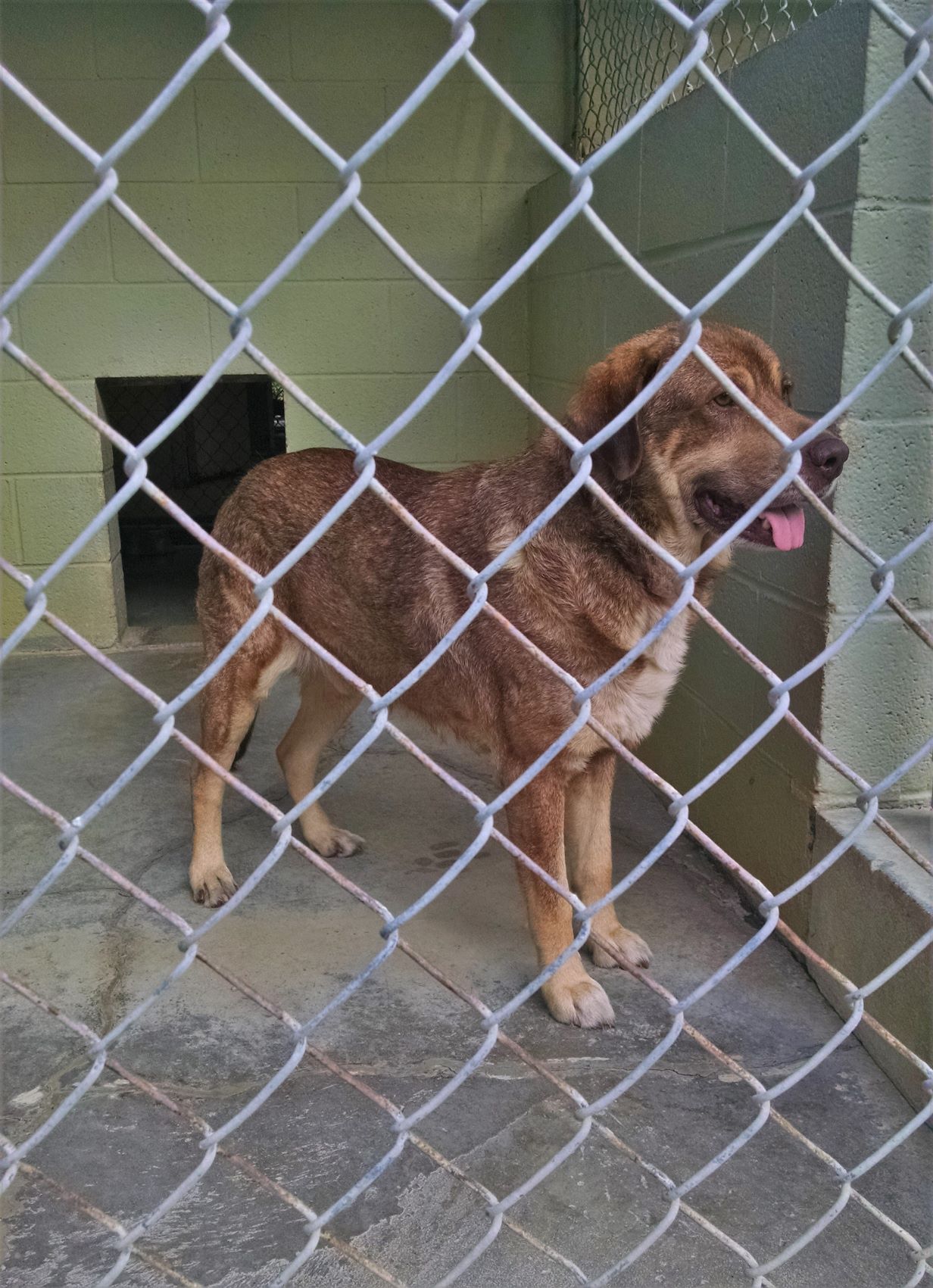
    A huge part of my profession is dedicated to the dogs that humans have mistreated and left behind. Instead of investing too much energy hating these people and hoping their floors turn to lava, I choose to help those loving individuals that help these dogs. It always warms my heart when someone shows up with a donation, be it food, blankets, treats or even cash. Doing good feels good and we should all do more of it. To all of you that contribute, I would like to address a subject that shelter people probably won’t. They are grateful for everything that arrives, and never want to complain. So, I will do it, LOL.

    THE TRUTH ABOUT CHEAP DOG FOOD: Well, the truth is that it is terrible for dogs. It deteriorates their health and often creates digestive upset. I know that these dogs are lucky to even be alive if they have landed in a shelter, trust me I get it. If you have ever volunteered or worked in a shelter you know the horror stories, they never leave you. But that’s just it, the stress endured by a dog living in terrible conditions, being removed from all he has ever known and placed into a shelter with other stressed out dogs in unimaginable. The last thing this poor dog needs is a terrible stomach ache and nutrient deficiencies. If a dog doesn’t feel well, he doesn’t act well or look well either. Health and diet are a giant factor in behavior. If this dog is to overcome all that has happened, he needs a decent diet to be whole and more adoptable.

    LET US ADDRESS THE ELEPHANT IN THE ROOM: COST. Yes, dog food has become crazy expensive, along with everything else. As we tighten our belts it seems like a stretch to ask people to spend more on dog food for shelter dogs. I have found a couple of less expensive dog foods that you could donate which can make a huge difference. (To these dog food manufacturers that I am plugging for free, you’re welcome and feel free to donate some yourself!!) The image below is the ingredient list from one of the most popular donations. This is one I advise against. Strongly.

    Here are a couple of foods that are easy to find and a much healthier choice. 1. Diamond Naturals Chicken and Rice. The cost is about $47 for a 40lb bag. 2. Gentle Giants non GMO dog food. The cost is about $45 for a 30lb bag. 3. Wholesomes Sensitive skin and stomach (Salmon or Lamb). The cost is about $45 for a 30lb bag.

    If you regularly donate to shelters, thank you for your generosity. If you never have, I hope this inspires you to help. Maybe you can go around your office and gather up some spare change and grab a bag on your way home from work. Better yet, drop off a bag of quality dog food and replace that empty spot in the back seat with a dog from that shelter!! If you need help with diet or behavior, some coaching from Tranquil Dog will get you on your way to a great and healthy life.

    Happy Tails to all!

    Would you like more information? Scan below to visit my website.

  • Prevention is the best cure for behavior- Puppies

    Prevention is the best cure for behavior- Puppies

    Author: Sara Baxter

    Tranquil Dog Owner, Dog Behavior Specialist/Trainer, Dog Foodie

    Tis the season!  For puppies that is. 

    Seriously, is there anything cuter than a puppy?  I think not, or at least I can’t think of one right now.  You bring them home and cuddle them, laugh at their naïve awkwardness, inhale that sweet puppy breath and all is right with the world.

    Ok, we all know how long that lasts. I remember telling each one of my puppies “you are so cute, but I can’t wait until you are a dog”.  The cuteness comes with a ton, and I do mean a ton of work.  But, if you do it right it will come back to you in the form of the best friend that you could ever have.  Do it wrong and it could be a painful memory of sadness and failure that you will always try to forget.

    Raising a puppy is similar to raising children.  They need to be taught, loved, encouraged and disciplined.  That said, the techniques that should be used are not always the same and if you start to struggle you should seek help right away.  Many of the behavioral problems that I see with my clients’ dogs could have been prevented during puppyhood. 

    It would be a very long post if I tried to explain all of the techniques here, in fact it would be more like a book.  I would like to offer some tips for you to think about and hopefully you will never need to call me.  Not all dogs are the same, but most are agreeable and cooperative and will do just fine with a little guidance.

    The first thing I would like to stress is that you should be choosing a puppy that will fit your family.  Please do some research to make sure the breed will thrive in the environment you will offer.  Behavioral problems often come from severe frustration and it can stem from, simply put, a bad fit.  While one of the cutest puppies ever to be found is a Border Collie, your second-floor city apartment may prove to be a difficult lifestyle for him.  I can’t even count the number of times a client has expressed remorse for getting the wrong kind of dog because “they always wanted one of those because they are so beautiful”.  Many of them, for the sake of the dog, were forced into rehoming.  While this is a selfless and loving act, I think we can all agree that it would be a scenario best avoided.

    You may be wondering about adoption where the breed is unknown mostly due to having no idea who the father is or fathers.  Yes, it is possible to have more than one father in the same litter, no judgement please, lol!  All you can do at that point is to speak to the rescue and ascertain the temperament of the mother and gain an educated guess as to her breed characteristics. 

    No matter the puppy’s origin, you should do your best to understand the puppy’s personality before you take him or her home.  Please try not to pick the one with the colors you like or the sad littlest one, but choose the attitude you think fits your own.  This is not an exact science.  There are puppy temperament tests, advice from shelter or breeder personnel, veterinary ideas and discussions and endless opinions from dog trainers to try to follow.  While I don’t necessarily disagree with someone performing a temperament test, this may not even come close to determining the eventual outcome of a dog’s personality.  Even a relatively submissive dog can become dominant if nobody else in the home is.  On the other hand, many people are very surprised to find that their nine-year-old dog is ruling the roost and nobody noticed because she never growled or bit anyone.  This is not to meant to discourage you from trying to ascertain temperament, just do the best you can with as much advice as you can get.  Again, if things go south all you need to do is get some help.

    Secondly, please avoid getting two siblings from the same litter.  Without going into a load of psychology here all I want to say is that if often ends in the dogs fighting.  You would think they would be happy to be together, and sometimes they are.  But sometimes they spend their lives trying to outdo each other and it can get just plain ugly.

    My next piece of advice would be to look past the cute and be a good parent.  I find that most behavior issues involving puppies stems from them being spoiled.  I see people laugh when the puppy barks and gets snappy when ignored.  They try to engage their human by being louder and more obnoxious and bite at the hand that tries to pet them.  Honestly, this really isn’t funny.  Imagine your kid demanding that you take him to Disney right now and hitting you when you say “not today”.  Would you laugh at that?  I’m going to go with a hard no.  So why is it ok for the puppy to “speak” to you that way?

    There are a lot of gentle discipline techniques you can employ and I suggest you do. Without expressing your expectations of correct behavior, you will have a four-legged monster on your hands. Just like children, puppies do expect to be disciplined and it is totally natural so don’t feel guilty for setting some boundaries.

    And last but not least, SOCIALIZE your puppy!  If your dog is sequestered throughout life and given no education as to proper social behavior, life for both of you will…well, kind of suck.  Dogs are social beings designed to live in community form.  As soon as all vaccinations are complete and the vet gives you the ok, go out!  Take your puppy to socialization classes at a training center, or dog day care.  Go to the store so he or she can meet animals, children, adults, folks in a wheel chair, hear busses and trains and experience crowds.  Without this your dog may never learn how to be a citizen.  This leaves him in boarding without friends when you go away, locked in the bedroom when people come over or upset when people or dogs approach on a walk.  None of this is natural behavior for dogs, it is created by humans.  It limits not only the dog’s life but yours as well. 

    I have one last offering for you.  This is a link to a free potty-training video on my website that you are welcome to watch.  It will offer some insight as to what the dog or puppy may be thinking while you are standing in the rain wondering why she won’t just pee already.  It will address the most common annoyances on this topic and help you both understand each other better.  I hope you find it helpful since this can really be a bummer of a chore.

    If you do find yourself in over your head, please don’t hesitate to reach out.  There is a form you can fill out for questions on my site.  I hope you enjoy your new little fuzzy bundle of joy.  As I said in the beginning, they can grow to be the best friends on Earth.


    Happy Tails!

    Sara Baxter/Owner, Behavior Therapy and Training

    Tranquil Dog, LLC

    www.tranquildog.com

    860-942-9926


  • YOU ARE WHAT YOU EAT…(AND SO IS YOUR DOG!)   “To Grain Or Not To Grain”

    YOU ARE WHAT YOU EAT…(AND SO IS YOUR DOG!) “To Grain Or Not To Grain”

    Choosing the best food for your dog is no easy task…

    Author: Sara Baxter

    Tranquil Dog Owner, Dog Behavior Specialist/Trainer, Dog Foodie


    Choosing the best food for your dog is no easy task.  There is so much confusion about what is good and what isn’t.  Even if you are diligent and read the ingredients list, many of them are confusing.  Names like Brewer’s Rice sound pretty cool, but are they?  Rice is good right?  What about Grain Free foods?  “ I heard that grain free kills dogs” is a common comment I hear. 

    All excellent questions.  So, let’s start at the top.  The first thing I would like to say is that I wish all dogs could have manufactured dog food removed from their lives forever, no matter how much the bag costs.  It is highly processed using what I call vague ingredients.  Always remember that manufacturing dog food is a business and lowering overhead is important to any business, but what is the cost to the dog?  How high quality are the ingredients really?  After all, it is dog food.  What makes me wonder that?  The fact that some of them actually claim “human grade ingredients”, which must mean that the rest are not.  That is in fact the truth.  But in our everyday lives it is not realistic for most people to cook for their dogs, either because of the cost, the time or the research into the complete and balanced dietary needs of the dog.  And while I always advocate that whole nutritious foods be added to your dog’s life, this post is designed to help you choose a better bag of dog food.

    In a previous post I talked about the fact that I am not against grains if they are healthy and not too prevalent in the food.  Most higher quality foods have good grains in them like brown rice, barley, oats and the like.  My issues are the quality of the grains and the amounts.  For example, white rice is so low in nutritive value that I will not purchase dog food that uses it, at least in the first 10 ingredients. Second example: Brewer’s rice.  This one really aggravates me.  Sounds cool, it’s not.  Should be named something like “highway robbery rice”.  Here’s the actual definition on Wikipedia and most other sites:

    Brewers’ rice is the small milled fragments of rice kernels that have been separated from the larger kernels of milled rice.[1]Brewers’ rice and second heads are two of the many byproducts that rice milling creates. Second heads are milled rice kernels that are one half to three quarters of the size of original kernel.[2] Brewers’ rice is a milled rice kernel that is one quarter the size of a full kernel.[2] Second heads, depending on their quality, are mostly used to make rice flour, whereas brewers’ rice is used in beermaking and production of other fermented products, and for pet food.[2] “If the quality of the second heads are poor, they will be sold for pet food or dairy feed. Brewers rice is sold for pet food and dairy feed exclusively.”

    The question is, is this a dangerous ingredient?  By itself it is not, but using a large quantity of it lowers the nutritive value of the food and how does that affect the dog in the long run?  Again, we’re talking big picture here.  At the very least I would choose a food that does not list a healthy grain until the third ingredient.  There are other low-quality grains and I have attached a link at the bottom for your review.

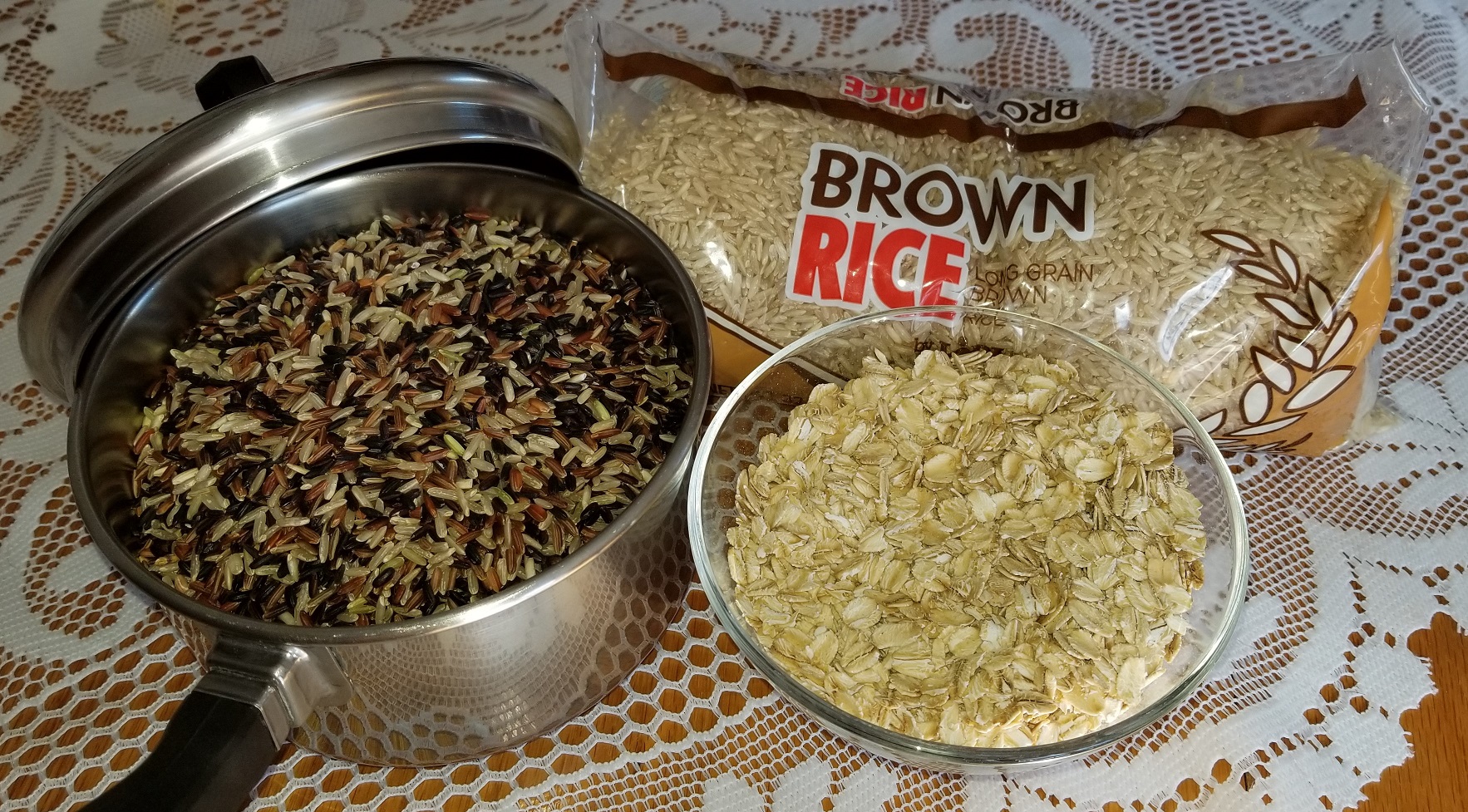
      Usually, grain inclusive foods have way too many carbs for a dog.  So, I choose a grain free diet for my dog and I add healthy grains to her diet.  What grains?  Brown, red, black rice and oatmeal usually.  The big giant question I get when I say this is the one about grain free dog food killing dogs.  Well, there is some truth to that in a very round about kind of way.  It is not about the lack of grains that became dangerous to the dogs, it was about what dog food companies replaced them with.  I want to remind you that dog food is a business so that is what usually drives the decisions in the board room.  It seems to me that sometimes common sense never even makes it through the door of that meeting!   Case in point, the addition of mass quantities of legumes in place of the more expensive grains.  See this ingredient list as an example:

    Chicken Meal, Lentils, Duck Meal, Field Peas, Chickpeas, Chicken Fat (Preserved with Mixed Tocopherols), Tapioca, Salmon Meal, Menhaden Oil (Preserved with Mixed Tocopherols), Flax Seed Meal, Canola Oil, Dried Apples, Natural Flavor, Marine Microalgae, Dried Chicory Root, Lecithin, Dried Blueberries, Dried Cranberries, Salt, DL Methionine, L-Lysine, Taurine, Calcium Carbonate, Lactobacillus Acidophilus Fermentation Product Dehydrated, Vitamin E Supplement, L-Ascorbyl-2-Polyphosphate (source of Vitamin C), Niacin Supplement, Biotin, Thiamine Mononitrate, L-Carnitine, d-Calcium Pantothenate, Riboflavin Supplement, Pyridoxine Hydrochloride, Vitamin A Acetate, Vitamin B12 Supplement, Vitamin D3 Supplement, Folic Acid,�Choline Chloride, Potassium Chloride, Zinc Proteinate, Betaine Anhydrous, Iron Proteinate, Selenium Yeast, Copper Proteinate, Manganese Proteinate, Calcium Iodate, Yucca Schidigera Extract.��

    Three of the first five ingredients are legumes.  Think about that being fed to your dog every single day.  Lentils are not a bad ingredient, neither are chickpeas, but where is the moderation?  This dangerous trend gained a strong foothold somewhere around 2014 and  has held fast despite the scientific evidence denouncing it.  The problem specifically related to this is Dilated Cardiomyopathy.  DCM is essentially a reduced ability for the heart to circulate blood, a weakness if you will, to put it very simply.  The most common cause of this in dogs is a taurine deficiency.  Science is looking into legumes as a contributing factor in the deficiency.  While most dogs manufacture their own taurine in acceptable levels, legumes are highly suspected to be interrupting this process in some way with devastating results.  There is a link at the bottom of this post to read what the FDA has said about it, but it is really easy to look up info about this issue.

    The bottom line is that the claim that grain free food kills dogs is not telling the whole story.  If you really wanted to tell the whole story about how a dog’s health is directly affected by diets then it would probably take a whole library of posts.  There are some pretty sketchy ingredients in dog food bags from colors to carcinogens and everything in between.

    Incidentally, the bag of dog food that I took the ingredients from costs about $69 for a 25lb bag.  Price doesn’t necessarily tell you much. 

    I have said it before and I will say it again, I am not a veterinary nutritionist, nor am I some kind of genius.  The good news is that you don’t have to be to make decent choices for your dog.  My advice to you is to not just assume that a bag of dog food is good for your dog.  There have been some very irresponsible choices made by the pet food industry so it’s up to you to be your dog’s advocate.  These companies know that few people hold a magnifying glass to the ingredients list so they get away with a lot.  It is my hope that the research I do will help you make better decisions for your dogs to keep them happy and healthy for a long time.  After all, we love them with our whole hearts!


    Here are a couple of links for you to read further on this subject:

    https://www.fda.gov/animal-veterinary/outbreaks-and-advisories/fda-investigation-potential-link-between-certain-diets-and-canine-dilated-cardiomyopathy


    https://www.dogfoodadvisor.com/choosing-dog-food/dog-food-grain-by-products/


  • YOU ARE WHAT YOU EAT…(AND SO IS YOUR DOG!)  “People Food”

    YOU ARE WHAT YOU EAT…(AND SO IS YOUR DOG!) “People Food”

    “

    Author: Sara Baxter

    Tranquil Dog Owner, Dog Behavior Specialist/Trainer, Dog Foodie

    You have been hearing this your whole life.  So, why then is it not the very first place vets and doctors explore to diagnose medical problems?

    You can speculate about drug companies “encouraging” the vet to dispense their meds, or think that some vets just want to keep experimenting to make money. Perhaps they sell a line of food that is notorious for causing “allergic” reactions in dogs, so how could they bring that up?  Well, that may happen sometimes, but I don’t think that is normally the case. I think it just never occurs to some of them.  I have heard plenty of stories about how much testing a person went through just to find out it was a dairy allergy or celiac disease. I am pretty sure I am making some vets out there pretty mad, and I am sorry for that, it really isn’t my intention.  My goal is to have our dogs live LONG and healthy lives because we love them more than almost anything.  

    What you eat, which things you eat together and how often you consume certain foods can have a profound effect on your health especially long term.  It is no different for your dog.  I am hoping that through a series of posts I can share some of the research in canine nutrition that I have been working on since early 2006 when my Boxer, Gretel, suffered with food sensitivities.  Back then, my vet did not believe me when I told him that I thought it was the food.  There were very few choices for “natural” dog foods back then, but I can tell you that a diet change pretty much saved her life.  I will tell you that it is an ever changing culture and, sadly, I am not sure it has gotten better over the years.

    So, let’s compare people diet to dog diet.  Think about what you eat during the week.  You may not want to do that since perhaps you don’t eat the way you should, but look at all of the different things you eat regularly.  Either way, you do get most of what you need.  Does your dog have such diversity in his or her diet?  It is just as important for them as it is for us to be sure they are getting everything they need and not just the minimum required by law.

    During my behavior sessions I cover diet and I hear this all the time: “Oh no, I do not give him people food.”  My response to that is: “Please do.”  Now, to answer your next question; No, it does not cause begging.  Begging is a lack of understanding and respect for authority, basically a leadership issue.  Food aggression runs along those same lines, but all of that cannot be adequately addressed in a blog post for sure.

    If you didn’t know already, the ingredients in dog food are listed on the package by weight.  I won’t get into the breakdown of ingredients here, that will be for another post, but you should look at the label realistically.  Let’s use one popular, quality food as an example and I will not say which one so I don’t get myself into trouble. I just included the first 10 to 12 ingredients or so to make this point.

    Ingredients

    New Formula: Chicken, Chicken Meal, Whole Brown Rice, Brewers Rice, Barley, Chicken Fat (Preserved With Mixed Tocopherols), Rice Bran, Whole Grain Sorghum, Sweet Potato, Lamb Meal, Natural Flavor

    Original Formula: Chicken, Chicken Meal, Whole Brown Rice, Brewers Rice, Split Peas, Rice Bran, Chicken Fat (preserved with Mixed Tocopherols), Barley, Lamb Meal, Dried Sweet Potato, Natural Flavor, Dried Plain Beet Pulp

    If you think of these ingredients in terms of weight, and count the first seven ingredients as the bulk of the diet, what do you see?  I notice that four of the first seven are some sort of grain, or carbohydrate.  None of those are bad ingredients, but that is the reason I struggle with grain inclusive dog foods.  Add up the weight of the grains and it seems that there is too much.  You must remember that many people feed one kind of dog food, day in and day out for the dog’s entire life.  How can that possibly be good for the dog, no matter what is in the food? 

    As a side note, this food obviously has removed the legumes from the top of the list, and that is good to see.  It looks like that trend is finally ending, more on that later too.

    Anyway, my advice to you is to add a variety of foods to your dog’s diet. Whole, healthy foods will beat any highly processed dog food in the long run.  At this point I would not advise anyone to completely replace dog food altogether since we are not veterinary nutritionists and cannot assure the complete balance of vital nutrients.  But the occasional chicken dinner with veggies and a fruit dessert will only help your dog.  Sometimes I don’t cook, so my dog Frieda will have a dinner that looks something like this:  Rotisserie chicken, oatmeal, Gerber baby food like sweet potato, mango and kale, fish oil, probiotics.  Be creative but be careful not to feed the wrong things.  Here are some helpful links to get you on your way.

    www.dogfoodadvisor.com

    https://www.aspca.org/pet-care/animal-poison-control/people-foods-avoid-feeding-your-pets

    Go to posts, create a post. it will show up on this page.

    “

    Watch for more posts to help you choose the best diet for your best friend!